
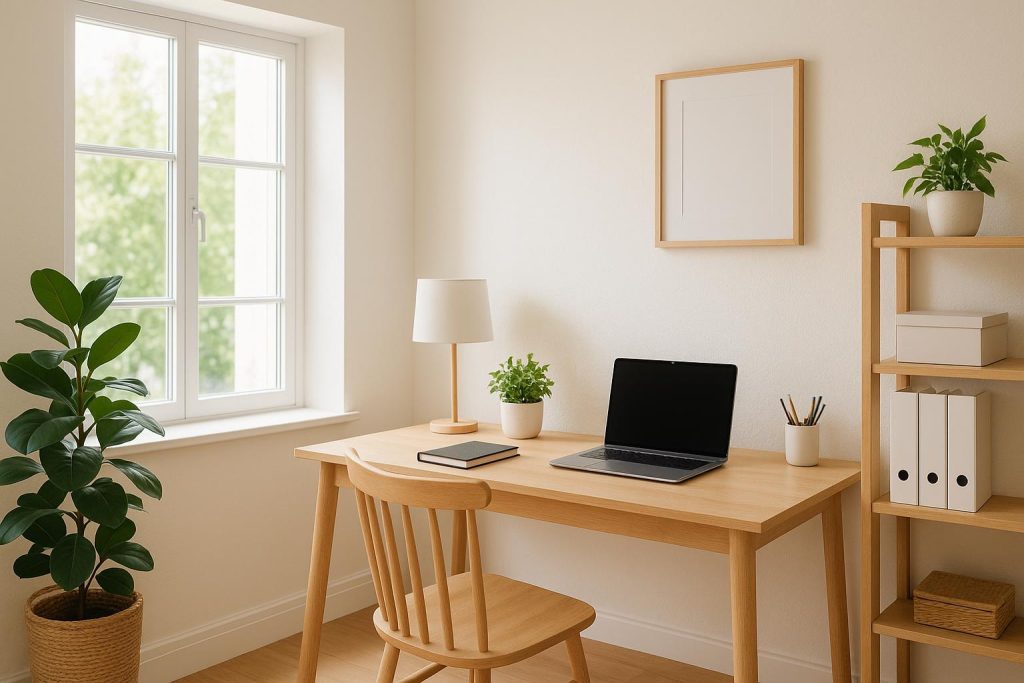
Understanding Home Office Expenses in Canada for Self-Employed Individuals
Home office expenses can offer a practical way for self-employed individuals in Canada to reduce their taxable income. By allocating business-related costs to your workspace, you can potentially lower the overall financial burden of running a business out of your home. Yet, success in this area requires a clear grasp of rules, precise calculations, and careful documentation. This comprehensive overview covers what self-employed Canadians need to know to make the most of home office expense claims. Whether you have straightforward tax needs or more complex cross-border tax obligations, following these steps can lead to a more accurate filing and a stress-free process.
1. What Constitutes a Home Office?
In Canada, a home office generally refers to the part of your home you use to conduct your self-employed business activities. This might be a dedicated room where you meet clients, manage paperwork, or store inventory. However, it doesn’t always need to be an entire room. If you use a specific area in your house exclusively for business, that could suffice. The Canada Revenue Agency (CRA) typically requires that your home be your principal place of business or that you regularly meet with clients, customers, or patients there. Make sure you have a solid understanding of these conditions to remain compliant.
While it might sound simple, determining if your home office meets the CRA’s guidelines can be the most crucial step in helping you stay compliant. For instance, if you also have a commercial office elsewhere that you use for work, you might not qualify to claim home office expenses. Confirm that you meet all requirements before proceeding, especially if your taxable situation involves cross-border tax considerations or if you have US business tax obligations.
2. Determining Your Eligibility for Home Office Deductions
It is not enough to simply have a desk in your living room. The CRA looks for two main criteria:
- Principal Place of Business: If you have no other location where you conduct the bulk of your business activities, your home office likely qualifies.
- Regular Meeting Space: If you use a designated area in your home to meet clients, customers, or patients on a regular basis, you may claim some expenses.
Be sure you can back up your claim if the CRA requests more details. In many cases, an experienced tax professional can provide personalized guidance on whether your home setup meets these conditions. People with more complex income streams, such as those who handle both Canadian tax services and US tax needs, should consider seeking specialized input. Doing so often ensures accurate filing and prevents oversights.
3. Calculating the Percentage for Business Use
One of the most talked-about aspects of claiming home office expenses is the method for calculating what portion of your home’s costs can be allocated to business. The general approach is straightforward: calculate the percentage of your home’s total area that you use for work, multiply the allowable expenses by that fraction, and claim that amount on your tax return.
For example, assume you have a 2,000-square-foot home, and you use 200 square feet exclusively as a home office. This area equals 10% of your total living space. Thus, you may generally claim around 10% of certain expenditures, including rent or mortgage interest, utilities, property taxes, and more. The calculation can be more nuanced if the home office also doubles as a personal space outside of business hours. If you only use your bedroom as a workstation for half the time, for instance, you would need to factor in that partial business use. Accurate records illustrating how you arrived at your numbers will strengthen the credibility of your claim.
4. Categorizing Common Home Office Expenses
Once you establish that your home office meets the guidelines and you confirm the proper percentage of business use, the next step is to identify which expenses you can deduct. In general, self-employed individuals can claim the following, provided they align with business usage:
- Rent or Mortgage Interest: If you rent your property, you can deduct the proportion of your rent that corresponds to your home office. If you own your home, you may deduct the business portion of your mortgage interest (not the principal repayment).
- Property Taxes: Homeowners can often include a portion of property taxes proportional to the business-use area.
- Electricity, Heating, and Water: These utilities can be claimed based on the percentage of your home used for business.
- Home Insurance: A fraction of your insurance costs may be deducted if you own the home, typically matching your business-use percentage.
- Maintenance: Expenses such as repairs or cleaning services that specifically target your workspace are often fully deductible. General home maintenance costs may be deducted proportionally.
- Internet and Phone: You can claim a portion of these bills if you use them for business. Keep organized records to show how much usage is personal versus commercial.
These categories can expand or contract depending on your unique situation. Self-employed professionals who also manage cross-border tax matters or expat tax obligations might have additional considerations. When in doubt, work with a professional who offers integrated tax services to avoid missteps.
5. Relevant Documentation for a Stress-Free Process
Nothing is more important for tax compliance than having proper documentation. The goal is to be thorough while avoiding unnecessary clutter. If you keep track of your utility bills, property taxes, rent or mortgage interest payments, and receipts for maintenance and insurance, you’ll be well on your way to a stress-free process. A helpful approach is to have a dedicated folder or cloud-based system where you store each item as soon as you receive it.
Wondering what might trigger an audit or further questions? Overly large claims relative to your income or the size of your home office can raise red flags. Be cautious not to inflate your claims. Having clear, timely advice from an experienced tax professional can help you remain on track. If your situation involves complexities like US business tax obligations, an expert in cross-border tax is often crucial.
6. Recordkeeping and Filing Best Practices
Maintaining clean, well-organized records is beneficial for both immediate filing needs and any future verification. After determining your allowable business-use percentage, keep a simple log of your monthly expenses. File physical or electronic copies of bills and receipts according to the category: utilities, insurance, mortgage interest, or maintenance. Here are some best practices:
- Keep Records at Least Six Years: The CRA recommends storing supporting documents for six years after filing. This allows you to produce evidence if you are selected for review.
- Separate Personal and Business Costs: When you have both personal and business needs within the same home, additional attention to detail is essential.
- Use Bookkeeping Support: Professional bookkeeping support makes it easier to track expenses throughout the year, ensuring no receipts go missing and everything is categorized correctly.
- Leverage Apps or Software: Helpful software tools exist for easy scanning, organizing, and retrieving expense data. Pick a system that feels natural to use.
Whether your business deals with Canadian tax services alone or you juggle cross-border requirements, consistent organization is key. By adopting strong recordkeeping habits, you set yourself up for fewer headaches when deadlines approach.
7. Potential Pitfalls and How to Avoid Them
Claiming home office expenses can be straightforward, but a few pitfalls lurk if you are unaware:
- Overstating Your Business-Use Percentage: Claiming more business space than you actually use is risky. If audited, you will need definitive proof of the area you designate for work and the frequency of work-related activities.
- Forgetting Partial Shared Use: When a workspace doubles as family space or a recreational area, the calculation is more complex. Make sure your method for splitting expenses is logical and consistent.
- Failing to Update as Circumstances Change: If you move, remodel, or adjust the layout of your workspace, revisit your calculations. Being proactive is part of helping you stay compliant.
- Ignoring Cross-Border Obligations: If you earn income in both Canada and the United States, your home office deductions might need to be coordinated with your US tax or expat tax situation. Integrated tax services are often vital to ensure accuracy.
Avoiding these hazards can save you time, money, and stress. It all begins with accurate calculations and diligent documentation.
8. Working with Experienced Tax Professionals
For many self-employed Canadians, particularly those who handle multiple income streams or deal with cross-border issues, working with an experienced tax professional offers practical solutions. These specialists can provide personalized guidance that aligns with your specific scenario and helps you maximize your allowable deductions. They also offer clear, timely advice if you have unique questions about your special workspace arrangement or if you want to explore how to manage US business tax filings alongside your Canadian obligations.
An expert’s help can make your filings more seamless and less error-prone. When you work directly with someone who understands both tax systems, you gain confidence that you are submitting an accurate filing. Plus, you save time that you can redirect into building and growing your business. This personalized approach often includes bookkeeping support, which can further reduce the administrative burden.
9. Staying Compliant and Confident
Home office expenses are an important tool that self-employed people can use to offset some of the financial demands of entrepreneurship. By understanding the rules, assembling clear documentation, and calculating your business usage proportion with care, you set yourself on a path toward a smooth tax filing experience. Staying a step ahead fosters not only compliance but also peace of mind. When the time comes to finalize your return, you will be prepared and able to present a thorough record of your financial situation.
If your future goals include business expansion, offering new services, or crossing the border for fresh markets, you may also need professional insight to handle those evolving tax obligations as you go. Whether these revolve around expat tax questions or more general Canadian tax services, consistent attention to detail is invaluable.
10. Next Steps and Additional Resources
Whether you have just started a small business or already have an established presence, claiming home office expenses as a self-employed individual can lead to beneficial tax savings. From mortgage interest to insurance premiums, every allowable expense helps lower your taxable income. Keep the following points in mind for a smooth process:
- Remember to recalculate the business-use percentage if you repaint, remodel, or reconfigure your workspace.
- Stay organized by using folders—digital or physical—to collect receipts and bills throughout the year.
- Consider integrated tax services if your obligations span both Canadian and US tax systems.
- Ask for clear, timely advice from professionals if you are uncertain about any step.
If you are seeking more personalized guidance or require cross-border expertise, consider consulting an experienced tax advisor. They can identify and track every detail that might be relevant to your unique situation. For more information on how specialized tax services can streamline your tax compliance process, feel free to browse our Services page. If you need answers to specific questions about your home office, contact us to discuss practical solutions. By following the correct steps now, you can look forward to a streamlined, accurate filing experience and remain confident in your tax compliance year after year.